Understanding 7 IDDSI Levels: Your Complete Guide to Safe Eating with Dysphagia
IDDSI levels 0–7 explained in plain language — what each level means, real food and drink examples, how to test at home, and what to do if you're unsure.


If you or someone you love has been diagnosed with dysphagia, you've probably heard your speech-language pathologist mention something called "IDDSI levels." Don't worry if it sounds like alphabet soup at first; once you understand what IDDSI is all about, it becomes an incredibly helpful tool for safe eating and maintaining nutrition while living with swallowing difficulties.
What is IDDSI?
IDDSI stands for the International Dysphagia Diet Standardisation Initiative, and it's basically a global language for describing food and drink textures. Think of it as a universal translator that helps healthcare professionals, caregivers, and food manufacturers all speak the same language when it comes to dysphagia-safe foods.
Before IDDSI came along in 2016, different countries and even different hospitals had their own ways of describing modified textures. One place might call something "minced and moist," while another might call it "mechanically soft." This created confusion and potentially dangerous situations when people moved between care settings or traveled.
IDDSI changed all that by creating a standardized framework with clear definitions, testing methods, and visual cues. The system uses both numbers and descriptive names, making it easier for everyone – from healthcare professionals to family members, to understand exactly what texture level someone needs.
| Level | Name | Type | One-Line Description |
|---|---|---|---|
| 0 | Thin | Liquid | Water, juice, coffee — flows freely |
| 1 | Slightly Thick | Liquid | Flows slower than water — like light milk |
| 2 | Mildly Thick | Liquid | Pours in a ribbon — like buttermilk |
| 3 | Moderately Thick / Liquidised | Liquid + Food | Thickest drinkable liquid — also smoothest food texture |
| 4 | Extremely Thick / Puréed | Liquid + Food | Doesn't flow — spoon tilt test; puréed food |
| 5 | Minced & Moist | Food | Small pieces ≤4mm, cohesive and moist |
| 6 | Soft & Bite-Sized | Food | Tender pieces ≤1.5cm, fork-mashable |
| 7 | Regular | Food | No restriction — normal diet |
IDDSI Levels and Food Examples
The IDDSI framework includes 8 levels total – 4 for drinks (0-3) and 5 for foods (3-7), with level 3 overlapping for both liquids and foods. Let's break down what each level looks like.
IDDSI Level 0 - Thin Liquids
Level 0 represents thin liquids, which are exactly what they sound like: regular, unmodified beverages that flow freely and quickly. These include everyday drinks like water, coffee, tea, clear fruit juices, and sodas. When you pour these liquids, they flow smoothly and rapidly, and when you tip a spoon containing them, they run off immediately without leaving any residue. For many people with dysphagia, these thin liquids can be the most challenging to swallow safely because they move quickly and can easily go down the wrong way.
IDDSI Level 1 - Slightly Thick Liquids
Level 1 liquids are slightly thick, meaning they've been modified just enough to slow down their flow rate without dramatically changing their drinking experience. These liquids still flow off a spoon when tilted, but they do so more slowly than thin liquids. You might compare this consistency to milk that's been sitting out and has become slightly thicker, or like a very light smoothie. The thickening is subtle enough that most people can still drink these from a regular cup without much difficulty, but the slower flow gives people with swallowing difficulties a bit more time and control.
IDDSI Level 2 - Mildly Thick Liquids
Level 2 liquids are mildly thick and represent a more noticeable change in consistency. When you lift a spoon of this liquid and tilt it, the liquid flows off in a smooth, continuous ribbon rather than individual drops or a quick stream. The consistency is similar to buttermilk, eggnog, or a thin milkshake, thick enough that you can see the liquid has body to it, but still pourable and drinkable from a cup. These liquids coat the spoon slightly when poured off, leaving just a thin film behind.
IDDSI Level 3 - Moderately Thick Liquids & Liquidised Foods
Level 3 is where drinks and foods overlap in the IDDSI system. For liquids, these are moderately thick and represent the thickest drinkable consistency. These liquids can still be consumed from a cup, though some people might find it easier to use a spoon. When you dip a spoon into this liquid and lift it out, it leaves a distinct coating on the spoon that doesn't drip off immediately. The consistency is similar to a thick smoothie, liquid yogurt drink, or honey that's been warmed slightly.
Level 3 foods are liquidised, representing the smoothest food texture in the IDDSI level system. These foods are completely smooth with no lumps, bumps, or pieces whatsoever, and they're thin enough to be pourable like a thick liquid. Think of smooth, runny yogurt, thin pudding, or a perfectly blended smoothie bowl that you could drink through a thick straw. These foods require no chewing ability at all and can be swallowed with minimal tongue movement. They should flow easily off a spoon and can often be consumed with a spoon or even sipped from a cup.
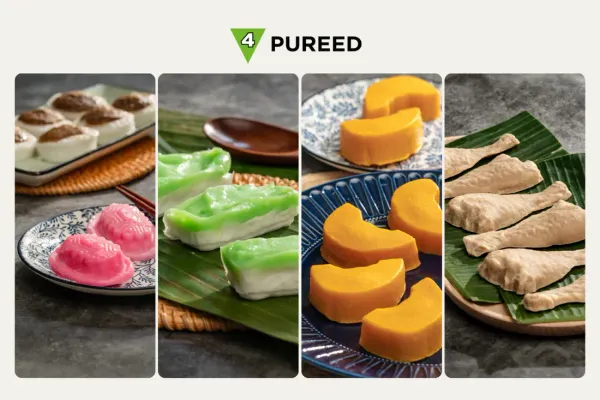
IDDSI Level 4 - Pureed Foods
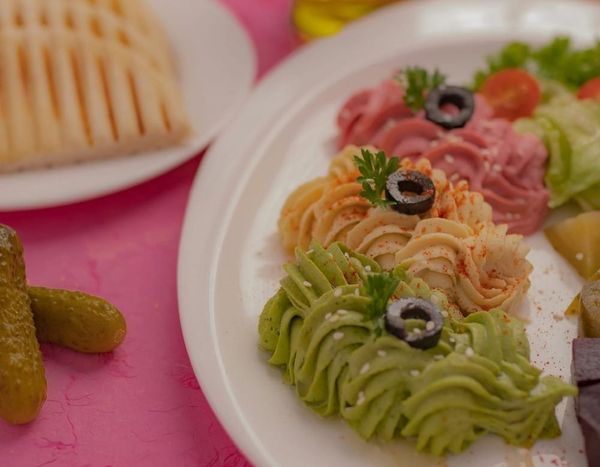
Level 4 foods are pureed to a thick, cohesive consistency that holds together on a spoon but doesn't require any chewing. These foods are thicker than Level 3 and won't pour or flow off a spoon when tilted. The texture is similar to smooth mashed potatoes, thick pudding, or smooth hummus – completely homogeneous with no lumps or pieces, but substantial enough to eat with a spoon like a regular meal. When you load a spoon with this food and tilt it sideways, it should slide off slowly in one cohesive movement — not pour off like liquid and not stay firmly stuck to the spoon. This is the spoon tilt test, and it is the most reliable daily check for Level 4 consistency. We use it in every recipe in our recipe section.
IDDSI Level 5 - Minced & Moist Foods
Level 5 foods are minced and moist, introducing the first texture variation that people with dysphagia encounter. These foods are soft and moist with small, visible pieces no larger than 4 millimeters (about the size of a rice grain). The overall texture should be cohesive and moist enough that the small pieces stick together rather than separating into individual bits in your mouth. Think of well-cooked ground meat in a thick sauce, finely chopped vegetables in gravy, or cottage cheese with small curds. While there are small lumps present, they should be soft enough to mash easily with your tongue against the roof of your mouth.
IDDSI Level 6 - Soft & Bite-Sized Foods
Level 6 foods are soft and bite-sized, representing a significant step toward normal textures while maintaining safety for those with dysphagia. These foods are naturally soft or have been cooked until tender, and they're cut into pieces no larger than 1.5 centimeters (about the size of your thumbnail). The foods should be soft enough that you can mash them easily with a fork using gentle pressure, similar to how you'd mash a ripe banana. Examples include tender pasta shapes, soft-cooked vegetables like carrots or zucchini, ripe fruits like banana or melon, flaky fish, or well-cooked rice. The key is that while these foods have normal appearance and some texture variety, they break apart easily and don't require significant chewing force.
IDDSI Level 7 - Regular Foods
Level 7 represents regular foods of all textures, which is essentially a normal diet without restrictions. These foods can be hard, crunchy, chewy, sticky, or any combination of textures. This includes everything from raw vegetables and tough meats to nuts, seeds, and crusty breads. People who can safely manage IDDSI Level 7 foods have normal swallowing function and don't require any dietary modifications for safety.
Choosing Packaged Food for People with Dysphagia

When you're managing dysphagia, the convenience of store-bought foods can be tempting, and there are definitely some advantages to consider.
- Pros: Packaged dysphagia foods offer incredible convenience, especially during busy days or when you're feeling overwhelmed. They're consistent in texture every single time, which eliminates the guesswork and reduces anxiety around meal preparation. Many commercial products are fortified with extra nutrients, helping address the nutritional challenges that often come with dysphagia. Plus, they have a long shelf life, making them perfect for emergency situations or when you can't get to the store.
- Cons: However, there are some significant drawbacks to consider. Cost is a major factor – specialty dysphagia foods can be expensive, and insurance doesn't always cover them. The taste and appearance often leave much to be desired, which can affect appetite and enjoyment of meals. Many packaged options are also high in sodium and preservatives, while being limited in variety, which can lead to food fatigue pretty quickly.
The reality is that most people find success with a combination approach, keeping some commercial products on hand for convenience while preparing fresh foods when possible. This gives you the best of both worlds: the security of knowing you have safe options available and the satisfaction of enjoying more appealing, home-prepared meals.
If you're looking for commercially available options, our guide to ready-made puréed foods covers what to look for and which products are worth buying. For thickening drinks to the right level, our food thickeners guide and drink-specific thickener guide cover the main options.
How to Test Your Own Cooking for IDDSI
One of the most empowering things about the IDDSI level system is that it includes simple tests you can do at home to check if your food meets the right texture level. These tests use everyday items you probably already have in your kitchen.
- The Spoon Tilt Test is used for puréed foods (IDDSI Level 4). Load a teaspoon with the puréed food and tilt it sideways. The food should slide off in one slow, cohesive movement, leaving the spoon mostly clean. If it sticks firmly, it is too thick. If it runs off like liquid, it is below Level 4. This is the standard test used in all our dysphagia recipes.
- The Fork Drip Test is used for liquids (IDDSI Levels 1–3). Dip a fork into the liquid and lift it horizontally. Level 1 drips in a fast, continuous stream through the tines. Level 2 drips more slowly. Level 3 drops fall slowly and heavily. Level 4 liquid sits on the fork and does not drip at all. For a precise liquid test, the syringe flow test is the validated method — our step-by-step guide covers it in full.
For minced and moist foods (Level 5), use the fork pressure test. Press down on the food with a fork using about the same pressure you'd use to mash a ripe banana. The food should break apart easily, and any lumps should be no bigger than 4mm.
Soft and bite-sized foods (Level 6) should pass the tongue test – you should be able to mash them against the roof of your mouth with your tongue, and pieces should be no larger than 1.5cm.
Remember, these tests are guidelines, not substitutes for professional assessment. Always follow your speech-language pathologist's specific recommendations for your individual needs.
How to Enjoy Food While Having Dysphagia
Having dysphagia doesn't mean giving up on enjoying food; it just means getting creative with how you approach it. There are plenty of ways to keep meals interesting and satisfying.
- Flavor is your best friend. When texture is limited, you can really go wild with seasonings, herbs, and spices. Pureed foods become much more appealing when they're well-seasoned. Try adding fresh herbs to smoothies, using flavored broths instead of water when thinning foods, or incorporating strong flavors like garlic, ginger, or citrus zest.
- Get creative with familiar favorites. Many beloved dishes can be modified to meet IDDSI level requirements. Lasagna can become a delicious pureed casserole, tacos can be transformed into seasoned ground meat with soft tortilla pieces, and even pizza flavors can be captured in a soft, cheesy dish. The key is thinking about the flavors you love and finding new ways to deliver them safely.
- Presentation matters more than you might think. Using colorful ingredients, attractive plating, and proper serving dishes can make modified textures much more appealing. Serve pureed foods in regular bowls rather than medical-looking containers, and consider using garnishes like a sprinkle of paprika or a small herb sprig.
- Social eating strategies can help maintain the joy of shared meals. Consider eating family-style, where everyone has their own texture-appropriate version of the same basic meal. This way, you're all enjoying "chicken dinner" together, even if yours is pureed and theirs isn't.
- Temperature and timing can significantly impact enjoyment. Serve foods at the right temperature – hot foods hot and cold foods cold. Many modified textures are more palatable when served at optimal temperatures.
Living with dysphagia requires adjustments, but it doesn't require giving up on good food or social eating. With understanding of IDDSI levels, some creativity in the kitchen, and the right mindset, meals can continue to be a source of pleasure and nutrition. Remember, every small step toward safe, enjoyable eating is a victory worth celebrating.
Frequently Asked Questions
Who decides which IDDSI level someone needs?
The IDDSI level is prescribed by a speech-language pathologist based on a formal swallowing assessment. It is not something to self-diagnose or estimate from a description. If you have not had a formal assessment, request a referral through your GP. The IDDSI level may include both a food texture level (3–7) and a liquid consistency level (0–4) — sometimes the same number, sometimes different.
What is the difference between IDDSI and the old NDD (National Dysphagia Diet)?
The National Dysphagia Diet used descriptive terms like nectar-thick, honey-thick, minced, and mechanical soft. These terms were inconsistent across countries, care settings, and even between hospitals in the same city. IDDSI replaced them with numbered levels and physical testing methods that produce consistent results regardless of where the test is performed. If you have heard the old terms — nectar, honey, purée — the IDDSI equivalents are approximately: nectar = Level 2, honey = Level 3, purée = Level 4. However the physical tests are the authoritative measure, not the name comparisons.
What does IDDSI Level 4 mean in practice?
Level 4 (puréed) means food that has been blended to a completely smooth, lump-free consistency that holds together on a spoon. It does not pour or flow like a liquid, and it does not require any chewing — the tongue can move it to the back of the throat without needing to break it down. Everyday examples of naturally Level 4 foods include smooth hummus, thick smooth yogurt, and well-made mashed potato. The spoon tilt test confirms Level 4 — the food slides off a tilted spoon in one cohesive movement.
What foods are allowed on IDDSI Level 5?
Level 5 (minced and moist) allows soft, moist foods with pieces no larger than 4mm — approximately the size of a grain of rice. Well-cooked ground meat in sauce, finely minced soft vegetables in gravy, cottage cheese, and well-mashed banana are typical examples. Foods must be moist throughout — dry or crumbly items that are otherwise the right size are not appropriate at Level 5 because they can clump in the throat. The fork pressure test confirms Level 5 — pieces should mash easily with light fork pressure.
Can IDDSI levels change over time?
Yes — in both directions. Post-stroke dysphagia often improves in the weeks to months after a stroke, which may allow progression from Level 4 to Level 5 or 6 as swallowing function recovers. In progressive neurological conditions like Parkinson's or dementia, the level may need to be changed to a lower number as the condition advances. Any change in prescribed IDDSI level must be made by an SLP following reassessment — do not change levels based on observation alone.
What is IDDSI Level 3 — is it a food or a liquid?
Both. Level 3 is the one level in the IDDSI framework that covers both a liquid consistency (moderately thick) and a food texture (liquidised). For liquids, Level 3 is the thickest drinkable consistency — it can still be consumed from a cup but flows very slowly. For foods, Level 3 is the smoothest food texture — completely lump-free and thin enough to pour slowly, like a smooth drinkable yogurt or a perfectly blended soup. The same physical testing criteria apply whether it is a liquid or a food.
What happens if I get the consistency wrong?
Too thin increases aspiration risk — liquid moves faster than the swallow reflex can respond, increasing the risk of material entering the airway. Too thick increases the risk of residue accumulating in the throat after swallowing, which can also be aspirated, and increases the effort required to swallow which causes fatigue. Neither direction is automatically safe — the prescribed level represents the specific balance appropriate for that person's swallowing profile. Always verify consistency with the appropriate IDDSI test before serving.
References
IDDSI Framework. (2019). Complete framework and detailed definitions. International Dysphagia Diet Standardisation Initiative. https://www.iddsi.org/framework
Cichero, J. A. Y., Lam, P., Steele, C. M., et al. (2017). Development of international terminology and definitions for texture-modified foods and thickened fluids used in dysphagia management: The IDDSI framework. Dysphagia, 32(2), 293–314. https://doi.org/10.1007/s00455-016-9758-y
IDDSI Testing Methods. (2019). IDDSI testing methods for food and drink. https://www.iddsi.org/testing-methods
American Speech-Language-Hearing Association. (n.d.). Adult dysphagia (Practice Portal). https://www.asha.org/practice-portal/clinical-topics/adult-dysphagia/