Dysphagia Straws: How They Work, Which Are Safest, and How They Compare to Cups
Standard straws are not safe for dysphagia, but specially designed dysphagia straws can be. Here's how they work, which ones are worth buying, and how they compare to dysphagia cups.


I'd been told repeatedly that straws were dangerous for dysphagia patients. However there's a significant difference between a standard drinking straw and a dysphagia straw designed with flow control. That distinction matters enormously, both for safety and for quality of daily life.
This guide covers how dysphagia straws work, which ones are worth considering, and how to decide between a straw and a cup for your specific situation.
First: Standard Straws Are Not Safe for Dysphagia
Before anything else, this needs to be said clearly: standard drinking straws are not appropriate for most people with dysphagia and should not be used as a substitute for prescribed equipment.
The sucking action required to draw liquid up a standard straw can pull liquid in faster than a compromised swallow reflex can respond. For someone with dysphagia, this increases aspiration risk rather than reducing it. The straws covered in this article are specifically designed to control or limit flow — they are not interchangeable with ordinary straws from a kitchen drawer or coffee shop.
If you are considering a straw for someone with dysphagia, this should always be discussed with an SLP first. They can confirm whether straw use is appropriate for that person's specific swallowing profile and which type of straw suits them.
How Dysphagia Straws Work
A dysphagia straw addresses the core problem with standard straws — uncontrolled flow — through one of two mechanisms:
One-way valve: A small valve inside the straw allows liquid to flow upward when suction is applied, but holds the liquid in place when suction stops. The person doesn't need to maintain constant suction between sips — they can rest without losing the liquid they've already drawn up. This is particularly useful for people who fatigue easily when drinking or who have reduced lip seal.
Flow limiter: A cartridge or resistance mechanism inside the straw physically restricts the rate at which liquid can pass through, regardless of how strongly the person sucks. This controls the bolus size per sip — similar in principle to the flow regulators in a SavvyBloom cup, but in straw format.
Both mechanisms reduce the risk of the person receiving more liquid per sip than their swallow can safely handle.
Do Dysphagia Straws Increase Aspiration Risk?
This is the question most caregivers ask first, and it deserves a direct answer.
Research published in the Spartan Medical Research Journal found that for patients experiencing dysphagia, aspiration remains a low risk for both cup use and straw use when the appropriate equipment is used correctly. The difference in aspiration risk between properly designed dysphagia straws and dysphagia cups is smaller than is commonly assumed.
However, context matters. This finding applies to appropriately designed dysphagia straws used with the right liquid consistency for the right patient — not to standard straws, and not to every person with dysphagia. The key variables are the individual's swallowing profile, the IDDSI level of the liquid, and whether the person has the oral motor control to use the straw safely. Only an SLP assessment can confirm all three.
5 Dysphagia Straws Worth Considering
Different straws work better with different thickness levels, from thin liquids like water and juice to nectar-thick and honey-thick consistencies. The following three options represent some of the most effective dysphagia straws available, each designed with unique features to address various swallowing challenges and liquid consistencies.
- Bionix Safe Straw — One-Way Valve
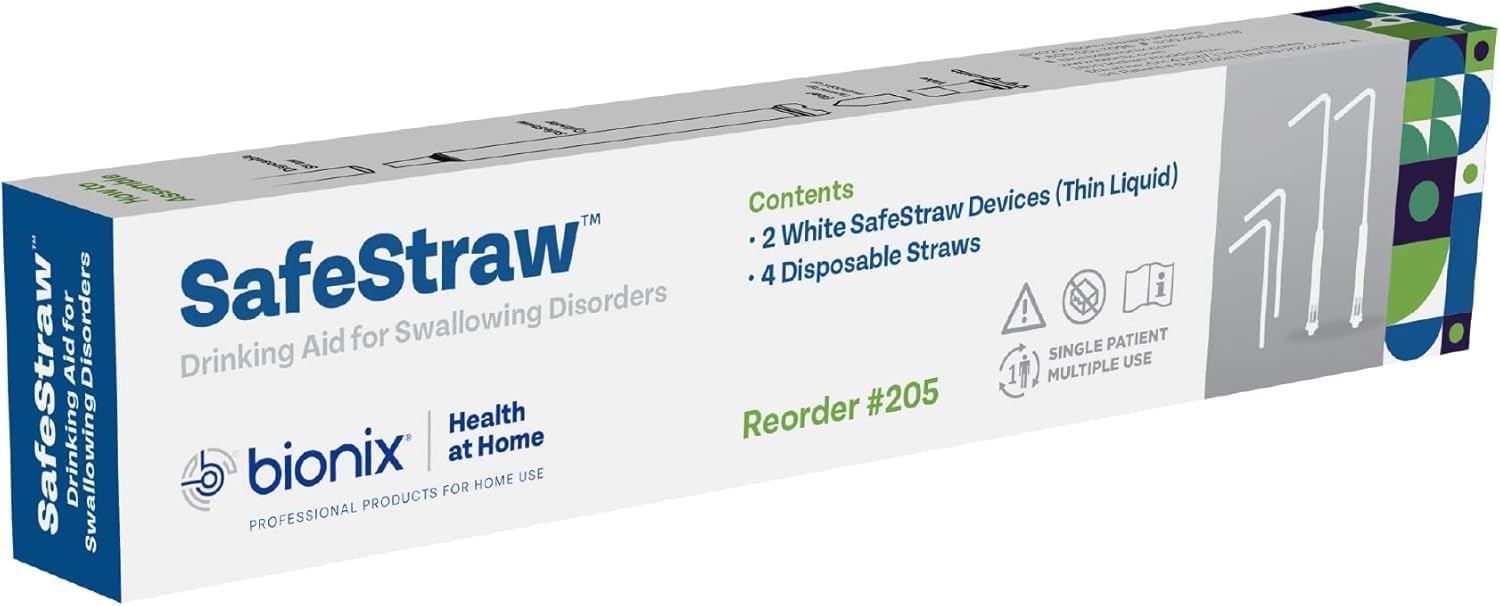
The Bionix Safe Straw features a one-way valve that holds liquid in position between sips, eliminating the need for continuous suction. Once liquid is drawn up, it stays there until the next sip — the person can pause, regroup, and continue without starting from scratch each time.
The straw is relatively firm, which makes it easier to keep in position in the mouth without slipping — a practical advantage for anyone with reduced lip seal or oral motor control. It works best with thin to mildly thick liquids (IDDSI Levels 0–2).
Best for: People who fatigue easily during drinking and need frequent rest breaks between sips. Also well-suited for anyone with reduced lip seal who finds maintaining suction difficult.
Watch out for: The valve needs regular cleaning after each use — run warm water through it thoroughly to prevent residue buildup. The firm material suits some people and not others; worth trialling before ordering in bulk.
Practical note: The one-way valve means liquid doesn't drain back into the cup between sips, which also prevents the person from inadvertently drinking more than they intended if they lose control of suction momentarily.
- TheraSTRAW Therapeutic Straw — Flow Limiter Cartridges
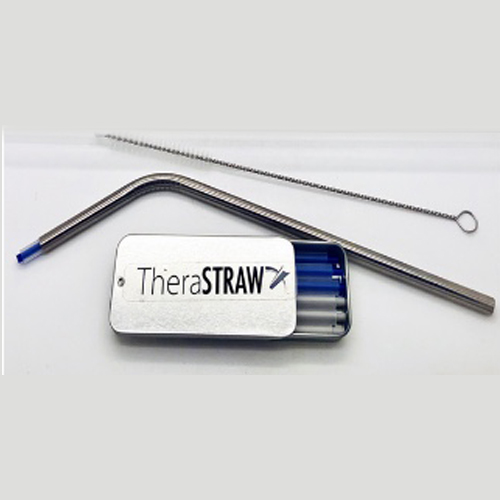
The TheraSTRAW system uses interchangeable cartridges that act as flow limiters, physically restricting the volume of liquid per sip. The cartridges come in different resistance levels, allowing the flow rate to be adjusted as swallowing function changes — either becoming more restrictive during a difficult period or gradually opening up as therapy progresses.
This is one of the few straw options designed explicitly as a therapeutic tool rather than just a practical aid. The flow resistance itself provides a form of exercise for the oral and pharyngeal muscles — drawing liquid against resistance engages the swallowing muscles more actively than unresisted sipping. This is worth discussing with your SLP, who may incorporate it into a broader swallowing exercise programme.
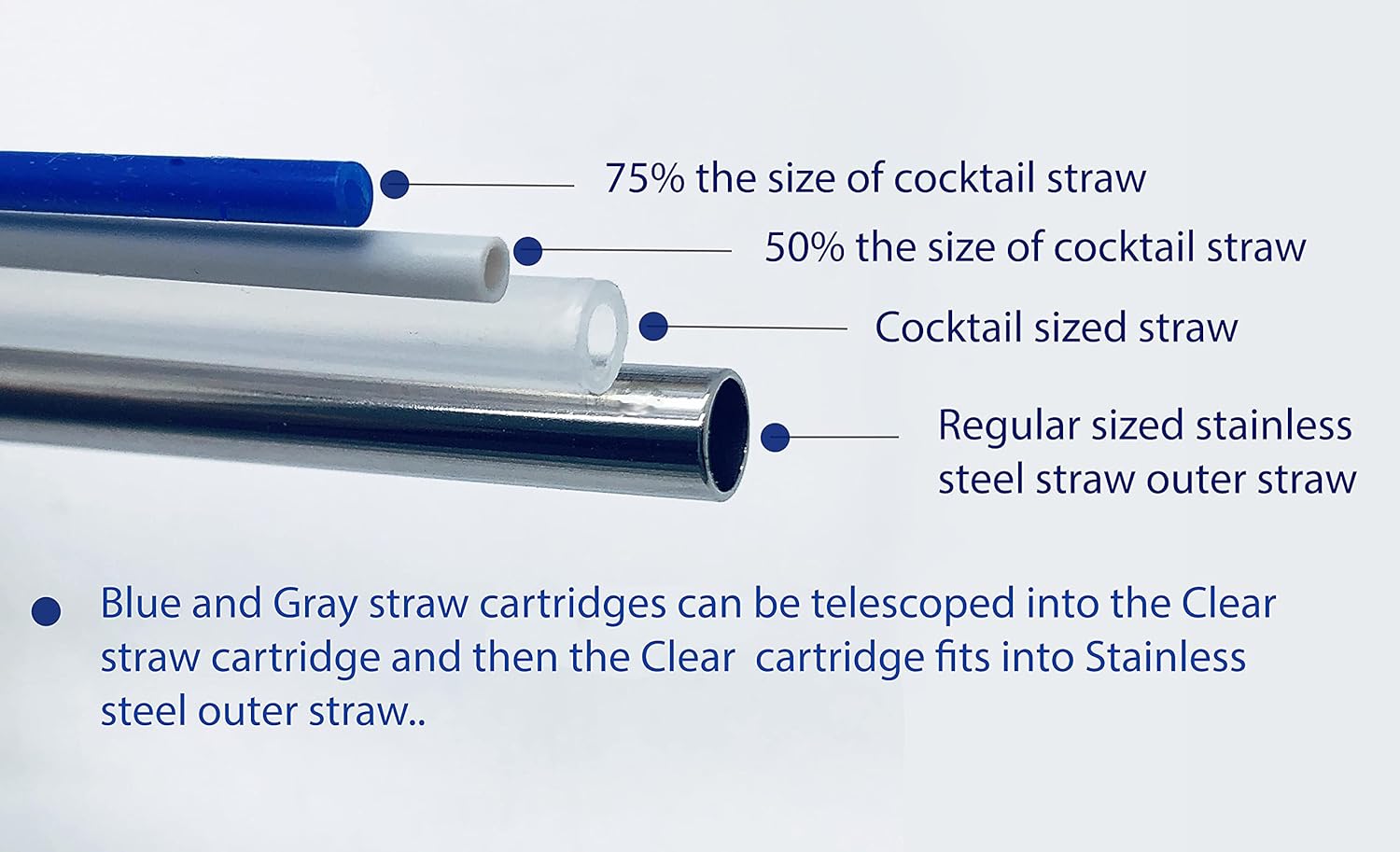
Best for: Anyone whose dysphagia is actively being managed with SLP therapy, and where the straw can serve a dual purpose — safe drinking and therapeutic exercise. Also ideal as a long-term investment since the cartridges can be swapped rather than replacing the whole straw.
Watch out for: The cartridge system requires a small amount of dexterity to change — for caregivers assisting someone with very limited hand function, this is worth factoring into the decision. Changing cartridges incorrectly can alter the flow rate unpredictably.
Practical note: The TheraSTRAW II is specifically designed for thin liquids — the most challenging consistency for most dysphagia patients. Bring it to an SLP session if possible to trial the different cartridge resistances under supervision before using them at home independently.
- Sipify Straws — Self-Regulating Flow Control
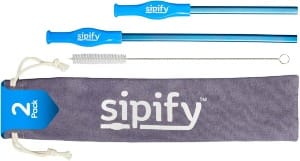
Sipify straws incorporate a passive flow control mechanism that automatically regulates liquid delivery without requiring the person to consciously control their suction strength. The mechanism was originally designed for spill prevention but has practical applications for dysphagia management, particularly for people with inconsistent oral motor control.
Unlike the Bionix or TheraSTRAW, Sipify straws look like standard drinking straws — there's no visible clinical equipment. For someone who is resistant to using specialist medical devices, this can make a meaningful difference to acceptance and compliance.
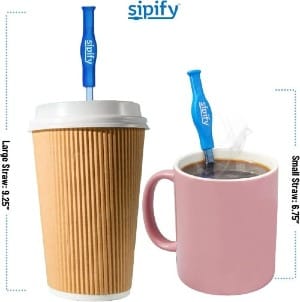
Best for: People with inconsistent suction control who benefit from passive flow regulation. Also, a good option for someone newly diagnosed who is resistant to equipment that looks medical.
Watch out for: The flow control mechanism is passive rather than clinically calibrated — it reduces flow variability but is not designed to a specific IDDSI flow rate, the way the TheraSTRAW cartridges are. Not a substitute for a clinically prescribed straw for someone with significant aspiration risk.
Practical note: Available in multipacks, which makes it economical for daily use. The familiar appearance also makes it easier to use in social settings — restaurants, family meals — without drawing attention.
4. One-Way Valve Straws — Generic Options
Beyond the branded options above, one-way valve straws are available from medical supply stores and online suppliers at a lower price point. The mechanism is the same as the Bionix — a valve holds liquid in place between sips — but without the brand-specific design features.
Best for: Budget-conscious caregivers who have already confirmed straw use is appropriate and want a reliable daily-use option without the premium price. Also useful as a backup supply.
Watch out for: Quality varies significantly between suppliers. Look specifically for straws marketed for dysphagia or medical use rather than general one-way valve straws designed for other purposes — the valve resistance and straw diameter matter for safe flow control.
Practical note: If buying generic, order a small quantity first to trial before committing to a larger supply. The valve mechanism in cheaper versions can be less reliable than branded alternatives.
5. Flexible Cutout Straws
Flexible straws with a cutout notch near the drinking end allow the person to drink without tilting their head back — the cutout accommodates the nose, keeping the head in a neutral or slightly forward position during drinking. This is particularly useful for anyone with reduced neck mobility, post-surgical restrictions on head movement, or for people whose SLP has recommended a chin-tuck posture during swallowing.
These are not flow-control straws — they don't regulate volume per sip. Their benefit is positional rather than flow-related. For someone who needs both flow control and positional support, a nosey cup may be a better solution; discuss with your SLP.
Best for: People with reduced neck mobility or those prescribed a chin-tuck swallowing posture by their SLP.
Watch out for: The positional benefit only applies if the person maintains the correct head position throughout the drink. A flexible straw used incorrectly provides no positional advantage.
Which one is Safer to use, Dysphagia Straws or a Dysphagia cup?
Neither is universally better — they suit different swallowing profiles. Here's a quick comparison:
| Dysphagia Straw | Dysphagia Cup | |
|---|---|---|
| Best for | Reduced lip seal, limited head mobility, thin liquids | Moderate to severe dysphagia, flow control, caregiver-assisted drinking |
| Requires | Adequate suction strength, oral motor control | Ability to tilt cup or caregiver assistance |
| IDDSI levels | Typically Level 0–2 (thin to mildly thick) | Level 0–3 depending on cup type |
| Independence | Usually self-managed | Can be self or caregiver-managed |
| Not suitable for | Significant suction weakness, thick consistencies | People who can only drink lying flat without assistance |
| SLP approval | Always required | Always required |
Some people use both — a straw for thin drinks at the table and a flow-control cup for thicker consistencies or for drinking in bed. The deciding factor is always the individual's swallowing profile, not personal preference alone.
For a detailed review of dysphagia cup options, see our Best Dysphagia Cups guide and our SavvyBloom dysphagia cup review.
Can dysphagia patients use straws?
Some can, with the right type of straw and SLP guidance. Standard straws are not safe for most dysphagia patients. Specially designed dysphagia straws — with one-way valves or flow limiters — control the volume per sip and are appropriate for specific swallowing profiles. Whether straw use is safe for a particular person must be confirmed by an SLP.
What is a one-way valve straw?
A one-way valve straw contains a small mechanism that allows liquid to flow upward when suction is applied but prevents it from flowing back down when suction stops. The person can rest between sips without losing liquid progress — particularly helpful for people who fatigue easily or have reduced lip seal.
What IDDSI levels can be used with a straw?
Dysphagia straws are generally suitable for Level 0 (thin) through Level 2 (mildly thick) liquids. Most cannot draw thicker consistencies without significant effort that may be unsafe. For Level 3 and above, a dysphagia cup is typically more appropriate. Always confirm with your SLP.
Is a dysphagia straw better than a dysphagia cup?
Neither is universally better — they suit different swallowing profiles. Straws suit people with adequate suction strength and reduced head mobility. Cups suit people with more significant flow control needs or who require caregiver assistance. An SLP assessment will identify which is most appropriate.
How do I clean a dysphagia straw?
Rinse thoroughly with warm water after every use, paying particular attention to flushing the valve mechanism. Most dysphagia straws are not dishwasher safe — hand washing is recommended. Replace the straw if the valve shows any sign of damage, discolouration, or reduced resistance — a faulty valve no longer controls flow reliably.
References
Robbins, J., Gensler, G., Hind, J., Logemann, J. A., Lindblad, A. S., Brandt, D., ... & Miller Gardner, P. J. (2008). Comparison of 2 interventions for liquid aspiration on pneumonia incidence. Annals of Internal Medicine, 148(7), 509–518. https://pmc.ncbi.nlm.nih.gov/articles/PMC7746115/
Steele, C. M., et al. (2015). The influence of food texture and liquid consistency modification on swallowing physiology and function: a systematic review. Dysphagia, 30(1), 2–26. https://doi.org/10.1007/s00455-014-9578-0
Sura, L., Madhavan, A., Carnaby, G., & Crary, M. A. (2012). Dysphagia in the elderly: management and nutritional considerations. Clinical Interventions in Aging, 7, 287–298. https://doi.org/10.2147/CIA.S23404
American Speech-Language-Hearing Association. (n.d.). Adult dysphagia (Practice Portal). https://www.asha.org/practice-portal/clinical-topics/adult-dysphagia/